


Timber rarely fails suddenly. It fails quietly, across several winters, in the places nobody looks.
A house at 1,000 metres spends much of the year sitting in cloud, so it holds water in joints, end grain and fixings long after the rain stops. Long-term locals often have the harder problem, because a deck that has been there thirty years has become part of the scenery. You stop seeing it. The decay does not stop working.
Here is how to check yours in about twenty minutes.
Why timber rots faster up here
The Bureau of Meteorology station at Katoomba sits at 1,017 metres and records 1,410.9 mm of rain a year across 108.4 rain days. Sydney Observatory Hill records 1,211.1 mm across 99.5 days. So we take about 200 mm more rain, on nine more wet days.
Drying matters more than rainfall, though. Katoomba averages 144.6 cloudy days a year against 79.8 clear ones, and 9am humidity sits between 64% and 82% depending on the month.
That combination is the whole problem. WoodSolutions puts the threshold plainly: “prolonged moisture content above 20% creates conditions for fungal decay and mould growth.” Fascia and cladding should sit at 9% to 14%. Mould needs even less, growing wherever temperatures exceed 5 degrees C and humidity passes 60%.
Timber does not rot because it gets wet. It rots because it stays wet.
How to tell if wood is rotten
Push a screwdriver firmly into the timber at right angles. Sound timber resists and the tip barely marks it. Decayed timber gives way with almost no pressure and feels spongy. If the screwdriver sinks more than a few millimetres, that is active decay, not surface weathering.
Other signs worth a second look:
- Paint cracked in a fine grid pattern, or lifted in a soft blister
- Patches that stay dark after a dry week
- Boards that have cupped or pulled away from the wall
- A musty smell around a subfloor
- Fascia that sags or waves between rafter ends
Where to check
Decks, bearers and posts. The boards you walk on matter least. The structure underneath carries people. The Queensland Building and Construction Commission investigated two deck collapses that caused injuries and one death, and in both cases the failure was hidden: corroded nail fixings in one, wall studs “totally rotted out due to the ingress of water into the wall frame” in the other. Neither deck looked dangerous from above. Test the post bases and the point where the deck ties into the house. Our guide to keeping decks in good order covers the upkeep side.
Fascia and eaves. The most common rot point on a mountains home, and blocked gutters cause nearly all of it. A gutter full of leaf litter holds water against the back of the board indefinitely. By the time a stain shows on the front, the damage is well advanced. Check this alongside any roof restoration work.
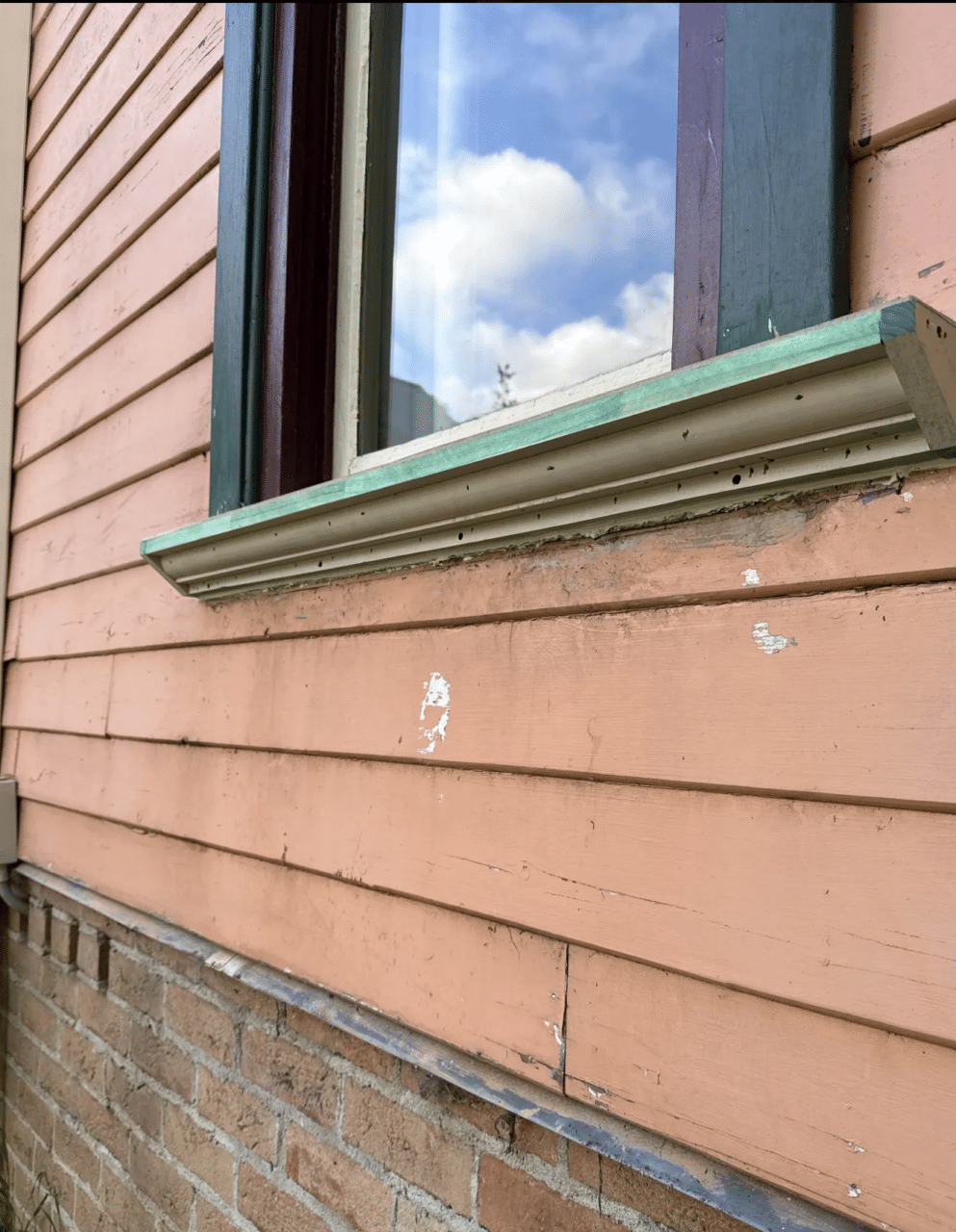
Weatherboards and windows. Both fail at the bottom edge and the ends, where end grain wicks water upward like a straw. Preparation is everything here, which is why we wrote about painting weatherboard homes that last.
Subfloors. Cool, shaded and poorly ventilated is ideal fungal habitat. If vents are blocked by garden beds or built-up soil, that space sits above 20% moisture content most of the year.
How to prevent wood rot
All of it comes down to one principle: keep water moving, and let timber dry.
- Clear gutters four times a year, after autumn leaf fall and before summer.
- Keep a working coating on every exposed surface. It is a barrier, not decoration.
- Seal end grain. Cut ends drink water many times faster than a board face.
- Maintain ground clearance. Keep soil and paving well below cladding and away from post bases.
- Open up subfloor vents, and cut back whatever is growing against them.
- Wash off the mould film. Grime holds moisture against a coating and shortens its life, so pressure cleaning once a year pays for itself.
- Fix leaks immediately. A dripping downpipe joint will destroy a wall frame in a few winters.
Gutters, rot and ember attack
The same blocked gutter that rots your fascia is a tray of dry fuel at roof level. The NSW Rural Fire Service reports that 85% of houses are lost from ember attack, with embers travelling over 100 metres ahead of a fire front.
If you are replacing timber on bush fire prone land, the materials must suit your Bushfire Attack Level. Blue Mountains City Council sets out six BAL ratings, and different parts of the same building can carry different ones. Settle that before the work starts, not after.
How often should you recoat?
Timber exposed to the weather should generally be recoated every 1–2 years. Timber that is protected under a pergola, veranda or other covered area can often go 4–5 years between coats.
There is a simple way to check whether your coating is still doing its job. Wet the timber surface. If water beads on top, the coating is still providing protection. If the water soaks in and darkens the timber, it is time to recoat.
For painted surfaces, keep an eye out for flaking, fine cracking and chalking, as these are signs the paint system is beginning to fail. You can read more in how often to repaint your home in the Blue Mountains.
When to call us
Do the twenty-minute check yourself. Call when you find timber that gives way under a screwdriver at a post base or ledger, a deck that moves or bounces, fascia that sags, rot that has reached the wall frame, or any structural replacement on bushfire-prone land.
That last group is not a painting job with carpentry attached. It is a carpentry job that needs painting afterwards, and the order matters.
At Blue Mountains Group, our painters and our in-house carpenters work under one roof for exactly that reason. We replace rotten weatherboards, fascia, window frames and decking, then coat the new work properly so it lasts. We handle smaller repairs and strata properties too, and every painting project carries our five year workmanship warranty.
We work across the mountains, including Katoomba, Leura and Blackheath. We know what a Leura winter does to a south-facing deck, because we have repaired a good number of them.