


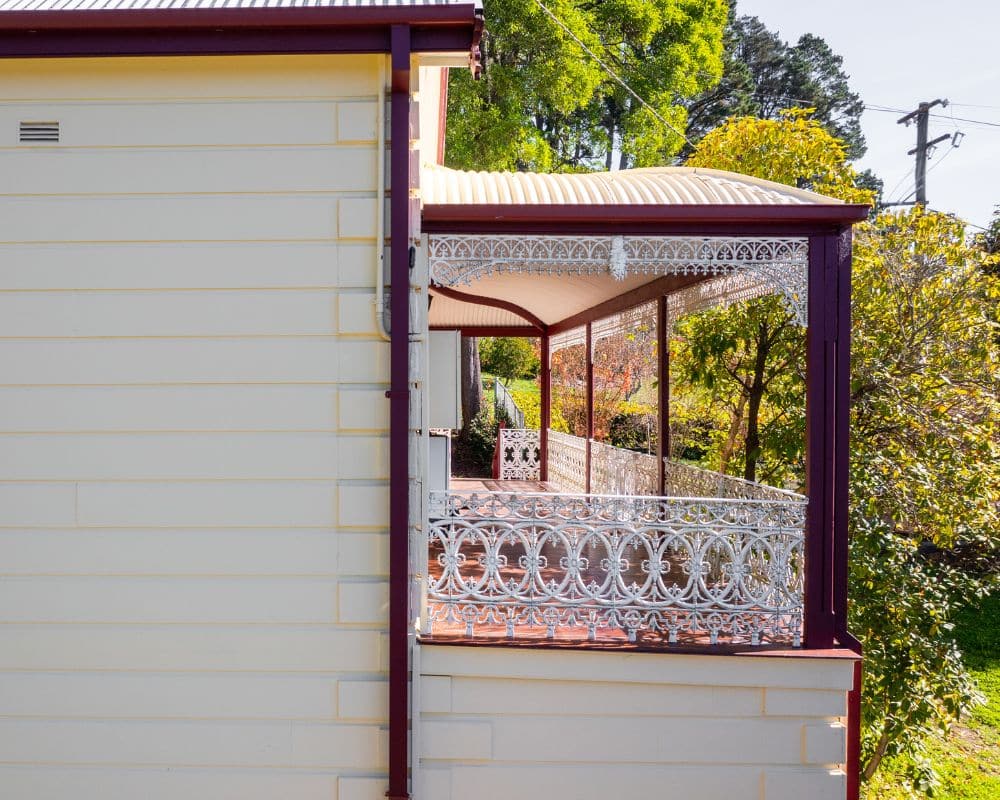
Living in the Blue Mountains means enjoying spectacular scenery, crisp mountain air and a lifestyle that is hard to beat. But the same environmental conditions that make this region so beautiful can also take a serious toll on your home’s paintwork.
If you have ever wondered how often you should repaint your home in the Blue Mountains, the answer depends on a range of factors, from the materials your home is built with to the specific microclimate of your street. Here is what you need to know to protect your home’s appearance, structural integrity and long-term value.
Altitude, UV and Rainfall: A Perfect Storm against your exterior paint in the Blue Mountains
The Blue Mountains sits at elevations ranging from around 160 metres at Lapstone to over 1,000 metres at Mount Victoria. According to Blue Mountains Australia, this elevation difference creates a temperature variance of roughly 7°C between the upper mountains and Sydney’s lower. Winter averages in the upper mountains hover around 5°C, while summer temperatures sit around 18°C in the higher elevations and can reach 29°C in the lower mountains.
This temperature range is only part of the picture. The region receives approximately 850 mm to 1,050 mm of rainfall annually, with higher totals in the upper mountains. Frost is common during winter, and humidity levels can climb above 75% during the wetter months of the year.
On top of that, the Bureau of Meteorology regularly records UV Index readings reaching “Extreme” levels (11 or above) during summer in the Blue Mountains. Even during cooler months, the UV Index typically sits at moderate to high levels. At higher altitudes, UV exposure is more intense because there is less atmosphere to filter the sun’s radiation.
Together, these conditions create a demanding environment for exterior paint. The combination of moisture, temperature fluctuation, frost and UV radiation accelerates the breakdown of even quality paint systems over time.
How UV Radiation Damages Exterior Paint
Ultraviolet light is one of the primary causes of exterior paint degradation. As explained by PCI Magazine, UV radiation breaks down the molecular bonds in a paint’s resin, causing the coating to weaken and deteriorate over time.
In practical terms, this process causes paint to gradually lose its gloss, fade in colour and develop a chalky residue on the surface. Over time, the coating becomes brittle and begins to crack, peel or flake. North and west-facing walls tend to cop the worst of it, as they receive the most direct sunlight throughout the day.
The Blue Mountains’ altitude makes this problem more pronounced. At higher elevations, the atmosphere is thinner and provides less natural filtering of UV rays. Homes in towns like Katoomba, Leura and Mount Victoria are therefore more susceptible to UV-related paint degradation than properties at lower elevations.
How Moisture and Cold Winters Wear Down Your Paint
While UV gets a lot of the attention, moisture is equally destructive to paintwork in the Blue Mountains.
When rain, fog or morning dew settles on your home’s exterior, the moisture can seep into small cracks and gaps in the paint film. As temperatures drop overnight, particularly during the colder months when frost is common, that moisture expands. When it warms again during the day, it contracts. This repeated expansion and contraction cycle puts stress on the paint film, eventually causing it to crack, blister and lift away from the surface beneath.
Moisture also creates favourable conditions for mould and mildew growth, especially on shaded or south-facing walls that do not dry out quickly. Aside from looking unappealing, mould can break down the paint film and the surface underneath, particularly on timber.
Dulux Australia recommends regular maintenance and thorough surface preparation because moisture is one of the leading causes of paint system failure. Without proper preparation and high-quality, weather-resistant paint, the protective barrier your home relies on can deteriorate far sooner than expected.
So, How Often Should You Repaint?
As a general guide, most Australian homes require exterior repainting every 5 to 10 years. However, in the Blue Mountains, several factors can shift that timeline. According to the Building Institute of Australia, the material your home is clad in plays a significant role:
- Timber weatherboard and cladding typically needs repainting every 3 to 7 years, depending on the quality of the previous paint job and the level of exposure.
- Rendered and cement surfaces generally last 5 to 10 years before requiring a fresh coat.
- Painted brick can last 10 to 15 years or longer, but this depends on exposure to moisture and direct sunlight.
In the Blue Mountains specifically, homes on exposed ridgelines or at higher altitudes may need repainting at the shorter end of these ranges. Properties with significant shade or proximity to bushland may also face increased moisture exposure and faster paint deterioration.
Interior repainting timelines tend to be longer, with most rooms lasting 5 to 10 years. The exceptions are high-traffic areas such as hallways and children’s rooms, as well as wet areas like kitchens and bathrooms, which may need attention every 3 to 5 years due to moisture, steam and general wear.
The quality of the previous paint job matters enormously. A professional paint application with proper surface preparation, a suitable primer and premium paint products will always outlast a rushed or budget job. The same applies to the paint itself; premium exterior products formulated for Australian conditions are engineered to resist UV, moisture and temperature fluctuation far more effectively than standard alternatives.
Warning Signs That Your Paint Is Failing
Rather than relying solely on a set number of years, it is worth inspecting your home’s exterior regularly for visible signs of paint failure. Catching problems early can save you significant time and money compared to waiting until the damage becomes severe.
Here are the key signs to watch for:
Peeling, flaking or blistering. This is the most obvious indication that the paint film has lost its adhesion to the surface. It often starts in areas of high moisture exposure, such as around windows, under eaves or on walls that face prevailing weather.
Chalking. If you run your hand along the wall and pick up a powdery residue, the paint’s binder has broken down due to UV exposure. While a small amount of chalking is normal over time, heavy chalking means the coating is no longer providing adequate protection.
Fading and discolouration. If one side of your home appears noticeably lighter or duller than the rest, UV damage has degraded the pigments. Darker colours are particularly prone to this, as they absorb more UV energy.
Cracking and crazing. Fine cracks across the paint surface indicate that the film has become brittle. If left untreated, these cracks allow moisture to penetrate behind the coating, accelerating the deterioration process.
Mould and mildew growth. Dark patches or green discolouration on the paint surface suggest that moisture is not being adequately repelled. This is especially common in shaded or poorly ventilated areas.
Timber rot or softness. If you notice any soft spots in timber weatherboards, window frames or fascia boards, the paint has failed to protect the substrate. Timber rot can spread quickly if not addressed.
What Happens If You Delay Repainting?
Postponing a repaint may seem like a way to save money in the short term, but it often leads to higher costs down the track. When paint fails, it is no longer just a cosmetic issue; it is a structural one.
Once the protective barrier breaks down, moisture penetrates the substrate. On timber, this leads to rot, warping and eventual structural damage that requires carpentry repairs before any repainting can take place. On rendered and masonry surfaces, moisture ingress can cause white salt build-up, surface crumbling and in severe cases, damage to the wall itself.
The longer you wait, the more extensive the surface preparation becomes. A home that is repainted on schedule might only need a wash, a light sand and a fresh coat. A home with years of neglected paintwork may require significant scraping, sanding, timber replacement, crack filling and multiple coats of primer and topcoat. That additional labour and materials can add considerably to the overall cost of the project.
There is also the impact on your home’s value. A well-maintained exterior signals to buyers, neighbours and visitors that the property has been cared for. Neglected paintwork does the opposite, and it is one of the first things people notice.
This Is When to Call a Professional
If you have noticed any of the warning signs above, or if it has been 5 years or more since your home was last painted, it is worth having a professional assess the condition of your paintwork.
A qualified painting team will evaluate the state of your surfaces, identify any areas of concern and recommend the right course of action, whether that is a full repaint, targeted repairs or a maintenance clean to extend the life of your current coating.
In the Blue Mountains, where the climate places unique demands on exterior finishes, having a team that understands the local conditions makes a genuine difference. From selecting the right products and preparation methods to managing the project around the region’s changeable weather, local expertise ensures a result that is built to last.
At Blue Mountains Group, our experienced team of painters, carpenters and home improvement specialists has been helping homeowners across the Blue Mountains, Lithgow and Blacktown regions protect and transform their properties since 2017. With a five-year workmanship warranty on our paint coating system, accreditations from Dulux and industry recognition from Master Painters, we are committed to delivering results that go beyond expectations.
If you are unsure whether your home is due for a repaint, get in touch with our team for a free, no-obligation quote. We will come to you, assess your property and provide honest advice on the best way to keep your home looking its best and standing strong against the Blue Mountains elements.